



Fix Your Posture, Save Your Shoulder
Shoulder pain is an all-too-common complaint, making routine activities like lifting, typing, and even sleeping difficult. It seems like every week we get a patient who comes to us with shoulder pain related to poor postural habits.
A lot of people know the old song about how the foot bone is connected to the knee bone (and the knee bone is connected to the thigh bone and so on). In the world of physical therapy, we call this regional interdependence. This means something in one area of the body is affecting another area. As the song says: it’s all connected.
Well, this is definitely true when it comes to the functioning of our shoulder joints. Poor postural habits and prolonged slumped postures put the shoulder in a vulnerable position, making it susceptible to pain or injury. The good news is our therapists at Recovery Physical Therapy have extensive training in identifying all the factors that are contributing to your shoulder pain and, most importantly, how to resolve them, one by one!
How Posture Impacts the Shoulder
One significant factor contributing to shoulder pain is Upper Crossed Syndrome (UCS). This condition is characterized by postural changes that affect how the muscles of our upper back and shoulder girdle work, which in turn affects the normal movement patterns in the entire upper portion of the body.
The classic signs of Upper Crossed Syndrome include:
- Forward head posture: The head is positioned forward in relation to the shoulders.
- Rounded shoulders: The shoulders are rounded forward, causing the upper back to appear hunched.
- Increased thoracic kyphosis: The upper back has an increased curvature, leading to a rounded appearance.
- Protracted shoulder blades: The shoulder blades are positioned more forward and away from the spine.
- Weak deep neck flexors: The muscles at the front of the neck that help stabilize the head are weak.
- Tight pectoral muscles: The muscles in the chest area are tight and may contribute to the rounded shoulder posture.
- Weak scapular stabilizers: The muscles that stabilize the shoulder blades are weak, leading to altered movement patterns.
These issues often lead to shoulder pain, limited range of motion, and impaired muscle function. Although the signs are common in a lot of people, not everyone with these signs will have the same symptoms. This is why it is essential to consult one of our physical therapists to identify your specific needs and design a tailored treatment plan that addresses your situation.
The Role of Physical Therapy in Resolving Your Pain
The first step to resolving your shoulder pain is a comprehensive evaluation. Our physical therapists will conduct a thorough history and physical exam that includes an assessment of your posture as well as the function of your shoulder blade musculature to identify any obvious changes to muscle activation and movement patterns.
Based on the assessment, our physical therapists will design tailored exercise regimens that address not only muscle length and strength but also neuromuscular factors. This could lead to more lasting relief and functional improvement.
Our team uses a functional approach that is rooted in neurology. We consider the interaction between your nervous systems, biomechanics of your spine and shoulder joints, as well as muscle function. This allows us to not only identify and address any imbalances in muscle length and strength but also from neuromuscular factors like muscle recruitment.
These exercises may include work on your spinal joint mobility and strengthening exercises to correct any postural dysfunctions contributing to your conditions. Our team spends a lot of time educating you about how you are holding and moving your body to ensure you have the tools to train your body in the proper movement patterns that help to correct imbalances and offer lasting relief.

Take the First Step Towards Lasting Relief Today
If you’re experiencing persistent shoulder pain, limited range of motion, or discomfort in your upper body, the time to act is now. These signs are not just distressing; they can have a long-term impact on your quality of life and overall well-being.
Reach out to Recovery Physical Therapy today for a comprehensive assessment and personalized treatment plan designed to restore balance to your muscles, improve your posture, and, most importantly, alleviate your pain!
Get Started with PT Now!
Return to Recovery Physical Therapy and Let’s Continue Your Journey to Wellness Together. Schedule Your Appointment Now!

Feel Better by Eating Better!
Paleo Gluten Free Stuffing
Ingredients
- 2 Tbsp olive oil, divided
- 1 small butternut squash, diced
- 2 cups Brussels sprouts, sliced
- 2 cloves garlic minced
- 1 medium-sized yellow onion, diced
- 3 celery stalks, finely chopped
- 1 red pepper, diced
- 1 apple, sliced and diced into small pieces
- 2 Tbsp finely chopped fresh sage
- 2 Tbsp finely chopped fresh rosemary (or 2 tsp dried)
- Salt & pepper to taste
Turkey Sausage:
- 1 lb Ground chicken or turkey
- 1 Tbsp fennel seeds
- 1 tsp paprika
- 1 tsp onion powder
- 1/2 tsp each salt and pepper
Directions:
Preheat the oven to 450°F. Mix together ingredients for turkey sausage in a large bowl. Add butternut squash and brussels sprouts to a baking sheet lined with parchment paper. Drizzle with olive oil and season with salt and pepper. Roast in the oven for 20 minutes, flipping halfway through. Heat 1 Tbsp olive oil in a large skillet over med-high heat. Add turkey sausage and break up with a slotted spoon, cooking about 5-7 minutes until just browned. Remove turkey from skillet and add in onions, celery, red pepper and apple, then drizzle with a tiny bit of olive oil and season with salt and pepper. Saute for about 7-8 minutes until veggies soften. Add turkey sausage back to skillet with other veggies. Add cooked squash and Brussels sprouts. Add that to the skillet along with rosemary and sage and saute another 2-3 minutes, stirring everything very well.
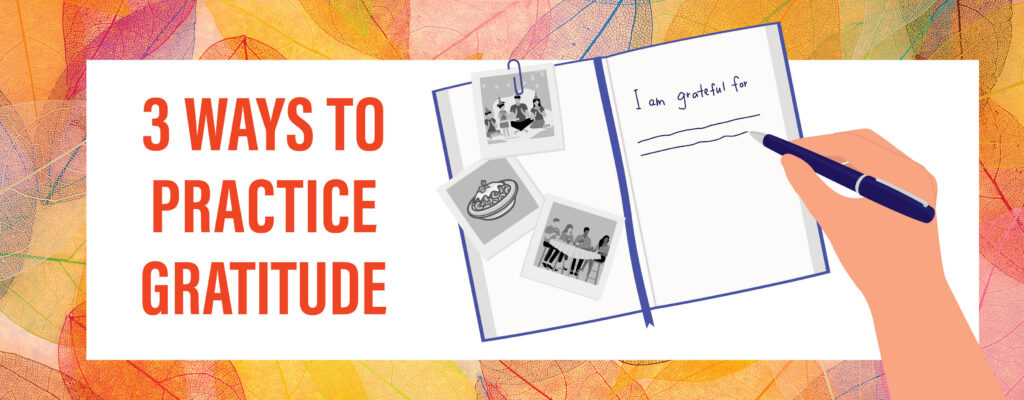
Did you know that being grateful is actually good for your health? It’s true!
We all love Thanksgiving for the excellent food, football, and time spent with family, but truthfully, this holiday means much more. Practicing gratitude can lead to greater happiness all year long.
According to Harvard Health Publishing, “Gratitude helps people feel more positive emotions, relish good experiences, improve their health, deal with adversity, and build strong relationships.”
If you want to implement more gratitude in your own life, take a look at these 3 tips.
1. Write thank you letters
Remember writing thank you letters? How long has it been since you wrote one? You don’t need to have a wedding, graduation, or other big life event to thank the people in your life. Try writing thank you letters to your friends and family for the little things– you’ll be surprised at how good it feels!
2. Write down what you are grateful for every day
This might sound intimidating, but it doesn’t have to be! Take a few minutes each morning or evening to write down at least 3 things that you are grateful for in your life. This repeated action helps us shift into a more positive mindset and can help fight symptoms of depression and anxiety.
3. Use visual reminders
It can be hard to remember to practice gratitude. With your hectic schedule, sometimes it can feel impossible to sit down, take a moment to breathe, and reflect on your blessings. Visual cues can be a great tool for reminding us to take a beat.
Something as simple as sticky notes, a poster, or even your home screen on your phone or laptop can help us remember to slow down and shift to a positive mindset.
Our Patients Get Great Results
“Great facility and if you’re looking for a dedicated and knowledgeable physical therapist, Jenny is the one to see.
When I had my injury, Jenny conducted a thorough evaluation with impressive attention to detail. She tailored exercises that significantly improved my mobility and enhanced my daily life. What stands out is her genuine care for her patients – she explains every step of the process at a pace that suits me. Her expertise, combined with her compassionate approach, truly makes her one of the best in the field.”
– S.Z.
Thank You for Subscribing
to Recovery Physical Therapy
Exercise of the Month
Shoulder Shrugs (Weights)
Stand upright with dumbbells in your hands and your arms straight by your sides. Slowly shrug your shoulders diagonally up and back in a straight line. Feel the contraction in your upper back just below your neck. Repeat 3 sets of 10 reps.