

Afraid of Falling? Physical Therapy Is Here To Catch You
Marion, 74, was terrified of falling. (Note that her name has been changed.) She’d heard the statistics: Falls are a leading cause of injury among people over 60 and the second leading cause of injury deaths worldwide. And although she’d always been active, she found her balance changing as she grew older, which only deepened her fears.
Like many people, Marion didn’t realize that the fear of falling can also be debilitating. That fear kept her close to home. She didn’t spend as much time with friends and family, and her lifestyle was much less active than it had been ten years earlier–which actually increased her fall risk!
But then Marion began seeing a physical therapist to help with her hip pain. When she shared her concerns about falling, he incorporated fall prevention strategies into her treatment plan, building Marion’s confidence enough that she returned to some of her favorite activities, like gardening and meeting with friends for a weekly coffee.
At Recovery Physical Therapy, we know falls can be frightening. But we also know that fall prevention training can help you face your fears and give you the confidence to live an active, healthy lifestyle, even into old age.
Ready to get started with your own fall prevention plan? Schedule an appointment with us today!
Understanding Your Fall Risk
Everyone’s fall risk is different. No single factor determines your likelihood of a fall; instead, it’s a complex blend of age, lifestyle choices, and health conditions. The more of these factors apply to you, the more likely you are to fall.
Which items on this fall risk list apply to you or a loved one?
- Advanced age (60 years or older)
- Being female (women are more likely to suffer falls than men)
- Joint pain, including from arthritis
- Spells of dizziness or vertigo (a spinning sensation)
- Decline in vision or hearing
- Sedentary lifestyle
- Impaired balance or gait
- Weakness in the lower body
- Use of medications that can cause dizziness or balance issues
- Neurological disorders such as Parkinson’s disease or Alzheimer’s
- Stroke survivor
- A history of falls
If you think you might be at a high risk of falling, don’t get scared–give us a call! Our team of physical therapists can assess your fall risk and provide you with a customized fall prevention plan that can lower the likelihood of a fall-related injury.
How Physical Therapy Can Keep You On Your Feet
A good fall prevention plan will address your specific fall risks. For example, someone who suffers from regular vertigo attacks would benefit from specialized therapy to address that issue. Meanwhile, someone with Parkinson’s disease doesn’t necessarily need to worry about dizziness but does need to address an impaired posture, balance, and gait.
Our therapists will work with you to decide which specific treatment options will be the right choice for your personal fall prevention plan. That said, there are some commonalities. Here are a few of the techniques we typically include:
- Pain Management: Joint pain can inhibit mobility, resulting in a sedentary lifestyle and increased fall risk. If you suffer from pain, we’ll work with you to manage it safely and effectively.
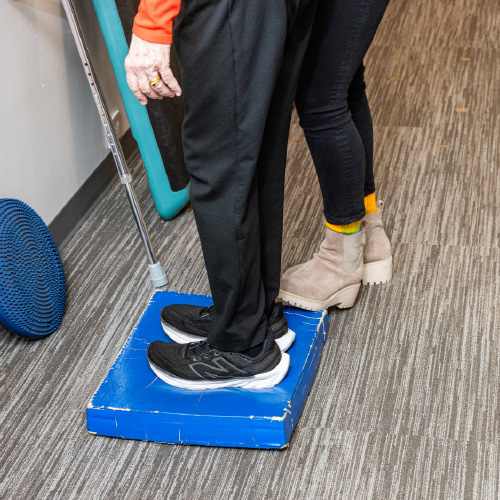
- Balance Training: Balance training is the foundation of fall prevention. We’ll guide you through specialized exercises that challenge your balance in a safe, monitored environment–ensuring you see improvements over time.
- Strength Training: One of the reasons older people have an increased fall risk is that you lose muscle mass as you age, making it more challenging to move around. We’ll prepare a strength training program appropriate to your ability level and help you restore some of that lost muscle mass.
- Gait Training: This technique focuses on improving your walking patterns. Certain conditions (such as Parkinson’s disease or stroke) can severely change your gait, and addressing those impairments can reduce your chances of falling.
- Regular Exercise Program: Staying active plays a significant role in keeping you from a fall. We’ll suggest an exercise program that suits your needs and abilities, such as a simple walking regimen.
No More Fear of Falling: Call Us Today!
A dedicated fall prevention plan from Recovery Physical Therapy can give you the confidence to age healthfully, no matter your fall risk. Call us today to schedule an appointment for your initial consultation!
Get Started with PT Now!
Return to Recovery Physical Therapy and Let’s Continue Your Journey to Wellness Together. Schedule Your Appointment Now!
Enjoy This Seasonal Recipe!
Summer Watermelon Feta Salad
Beat the heat with this crisp and refreshing Summer Watermelon Feta Salad, the perfect balance of sweet, salty, and tangy flavors. It’s a light, vibrant dish that’s sure to steal the show at any summer gathering.
Ingredients
- 4 cups watermelon, cubed and chilled
- 1 cup cucumber, thinly sliced
- ½ cup crumbled feta cheese
- ¼ cup red onion, thinly sliced
- 2 tablespoons fresh mint, chopped
- Juice of 1 lime
- 1 tablespoon olive oil
- Salt and pepper to taste
Optional Add-ins: - Grilled shrimp or chicken for protein
- Avocado slices for healthy fats
In a large bowl, combine watermelon, cucumber, red onion, and mint. Drizzle with lime juice and olive oil. Toss gently to combine. Top with crumbled feta. Season with a pinch of salt and pepper. Chill for 10–15 minutes before serving.


As we prepare for the 4th of July celebrations, here are key tips to ensure a joyful and healthy Independence Day:
Healthy Grilling: Opt for healthier grilling choices. Lean meats, fish, and a variety of vegetables can make your barbecue both delicious and nutritious.
Sun Safety: Apply sunscreen, wear protective clothing, and seek shade to prevent sunburn.
Fireworks Caution: Set off fireworks in a clear, open space away from buildings, vehicles, and vegetation. Always keep a safe distance and remember to have a bucket of water, a garden hose, or a fire extinguisher nearby.
Enjoy the 4th while keeping your well-being at the forefront. We wish you a safe and happy Independence Day!
Our Patients Get Great Results
“RPT is like visiting the side of your family that you always like to see. I’ve been coming to Recovery on & off again for some pesky injuries, and I’m always greeted with a friendly face & good conversation. Going to physical therapy here is never a chore (even at 7 AM!) & especially in their swanky new office. Their therapists are friendly & attentive and most importantly supportive through each session.”
– Gerilyn H.
Thank You for Subscribing
to Recovery Physical Therapy
4th of July Word Scramble
cemarai
elidtrncoaa
orkrfsiwe
ddieceenpenn
uraeecbb
beiyltr
Answer Key
america
declaration
fireworks
independence
barbecue
liberty
Exercise of the Month
ONE LEG BALANCE
Stand tall near a sturdy surface for support. Lift one foot off the ground and balance on the other leg, keeping your core engaged. Hold for as long as possible, then switch sides to improve stability.