
Rehabilitating my own injury from a clinician perspective
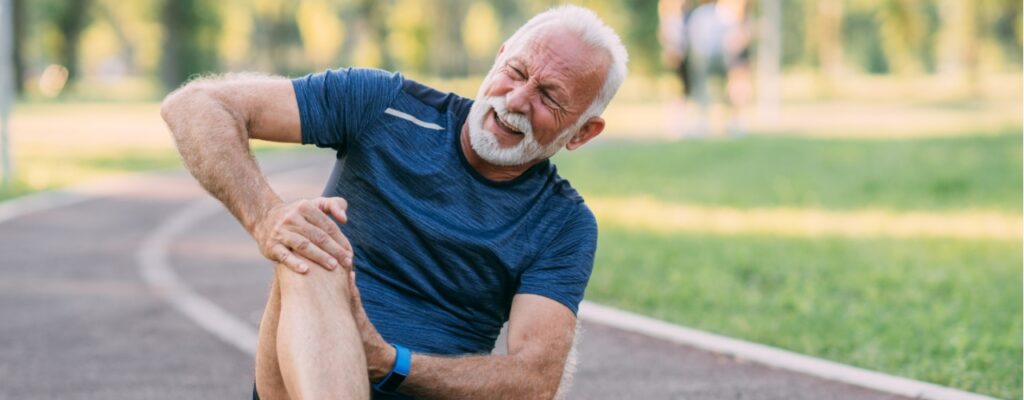
As a PT, I spend most days rehabilitating patients from their injuries. Now I am working each day to rehabilitate myself. My injury story started almost 7 years ago when I woke up with the strangest sensation. It felt as though a rock was stuck in my knee. Imaging revealed that somehow I had broken off a woodchip-sized piece of bone and cartilage from the end of my femur. Following this discovery, I underwent a two-part transplantation surgery with a 2.5 cm circle of cadaver bone and cartilage to repair the region where my “woodchip” broke off. After months of PT, I made my way to a full recovery resulting in no life restrictions. At this point, I was set on my path to PT school with renewed motivation. Unfortunately, this was not the end of my injury story.

Fast forward to last year, ironically on the best day of my life, my story took an ill-timed turn. At my wedding, I was dancing all night with my wife and friends when I began to feel some pain in my previously repaired knee. While I did not let it slow me down at the wedding, in the weeks following I started to experience sporadic sharp pain with catching sensations. My clinician determined that an orthopedic consultation was warranted. The imaging revealed that a large portion of the repaired site was beginning to peel off. Not long after that appointment, I was in surgery to clean up the flap of cartilage. Then, I was placed on a waiting list to receive a replacement piece of cadaver bone and cartilage. Thankfully, I got off of that wait list and went through a successful procedure in September 2023. From there, I began my recent period of rehabilitation.
Over the past almost three months I have been on disability, yet in the clinic as a patient. The experience of being on the other side of physical therapy has enlightened me in ways that I did not expect. Beyond the physical pain, the injury and disability made me feel lonely and feeble at times but also a world of comradery. From my unique perspective as a clinician who experienced an injury, I have gained knowledge, perspective for the use of assistive devices (wheelchairs/crutches) to commute around, and the feelings of entering the clinic as a patient.
I usually educate my patients that around the injury muscles often stop firing. The body thinks it needs to shut down these muscles to limit forces going through the healing site. That sounds all good on paper until, no matter how hard you try, you cannot move your freaking leg! This sensation of no control to activate a muscle is a crazy feeling. In my case, the muscles that straighten my knee (quads) shut down for about a 4-days. This made it so hard for me to lift my leg when I needed to get out of bed or into a car. While it was not fun, this experience as a clinician gave me a better understanding of how missing a directional force can change how bones sit on one another. I could physically feel how my shin sat further back compared to my thigh. Walking with a leg like that would be like trying to walk across a tightrope with excess slack. I plan to better convene this understanding in my future patient care.
Since walking was out of the question for 8 weeks, I needed to rely on crutches, and sometimes a wheelchair, to get around. I will never forget the world experience of taking a wheelchair (being pushed by my lovely wife through my neighborhood). The lips of the curbs were always as jarring as the awkward gazes of my neighbors. Normally, as all New Yorkers know, walking around the streets of the city can give you a sense of anonymity as you blend into the mobs and crowds. When you are in a wheelchair, that feeling I have now learned to appreciate does not exist. There is no sneaking around unseen or unheard with crutches or wheelchairs.
Aside from the emotional experience of mobility dependence, crutching a block is incredibly exhausting. The reward to getting to a destination, I usually needed to make a transfer. Transferring with only one leg available meant I needed to think about every situation thoroughly. On a commute to PT, I needed to ensure that I got into the car on the right side, entering with my back first so my immobilized leg could rest straight across the seat angled correctly and then exit efficiently to my final destination on 79th Street. In addition to the perfect plan, I hoped that each cab driver was kind enough to offer to open the door for me (all were). With 100s of ways to get to each destination in NYC, I just had to pray that the directions had me on the north side of 79th Street for an easy exit. And on the way back, I prayed that my NYC transit stars aligned once again.
Once I got the clearance to walk, the world was a different place. Before, I was at the mercy of others to help satisfy my simple human needs. Luckily, my amazing and helpful wife came to a great advantage here. In addition to my wife, I saw the greatest sides of humanity throughout my day.. Cab drivers would open up about their own hardships and wish me good in my future. In the clinic, patients who I once worked with were now my comrades going through a similar experience. In this respect, going into a clinic was a nice break from loneliness and an opportunity for some togetherness.
Having gained this experience, I hope to make PT more than just an exercise session, but a time to provide some togetherness, support, and comradery.